EV Charging Station Buyer’s Guide (AC DC) | ETEK EV Charger Solutions
Quick decision: AC wallbox vs DC fast charger
Choose an AC EV charger when
- You need cost-effective charging for residential, workplace, or long dwell-time parking.
- Typical power range is single/three phase AC (e.g., up to 22kW for many European-style deployments).
- You want a compact solution that can be wall-mounted or post-mounted.
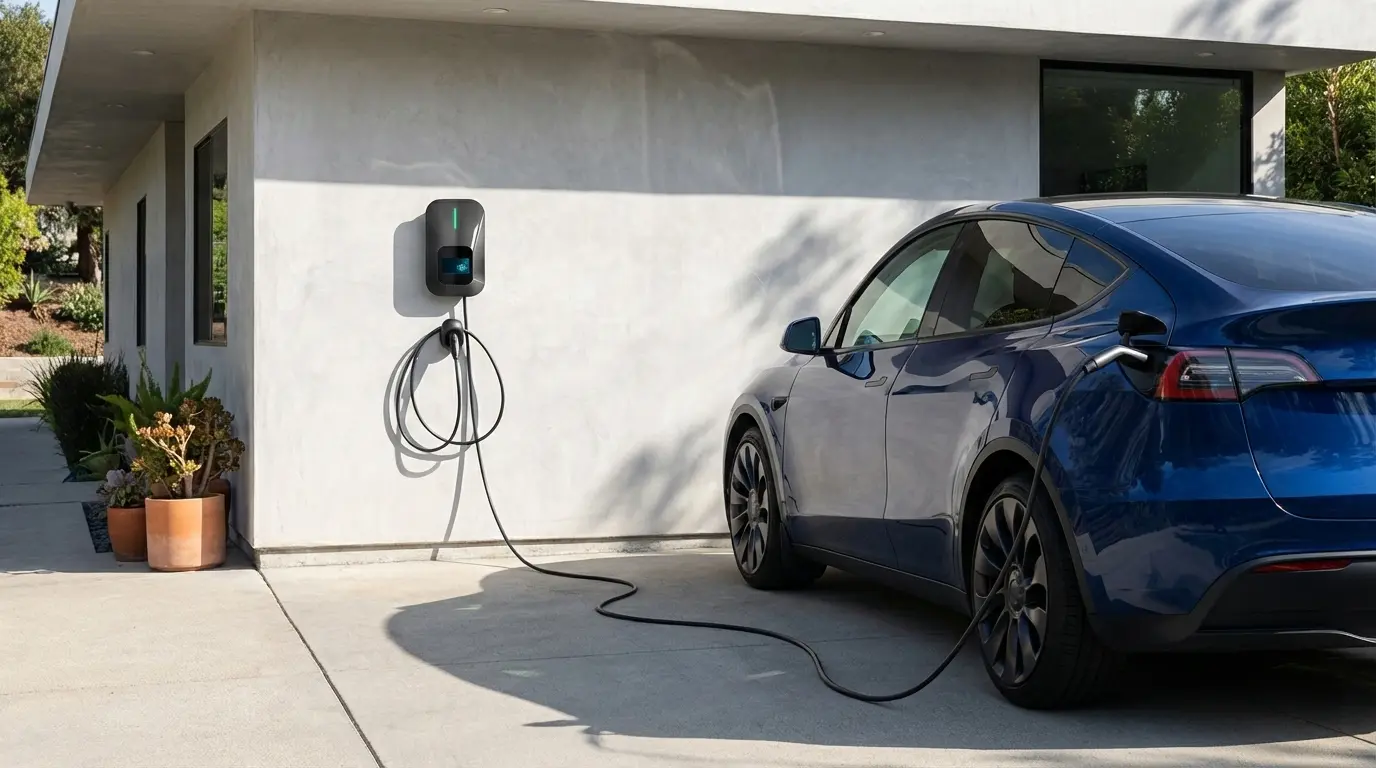
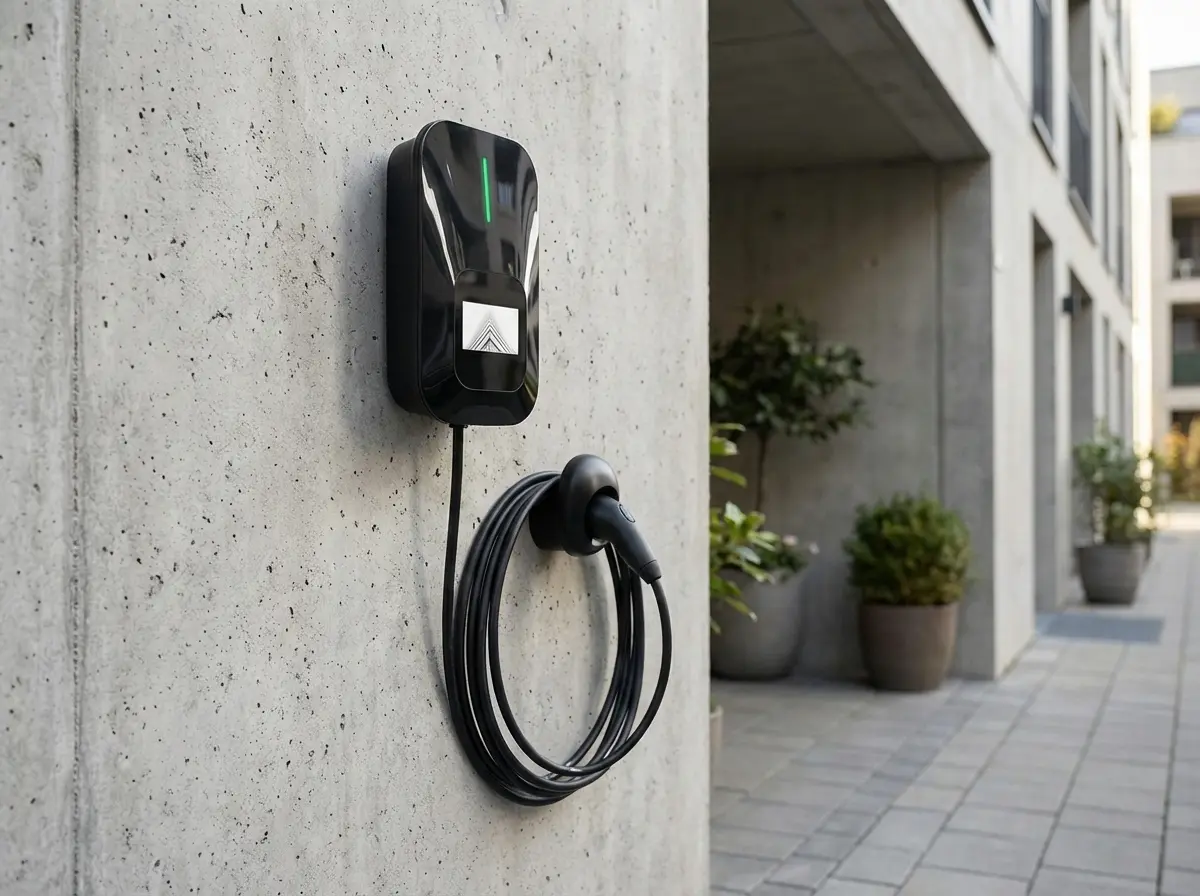
wallbox-style AC charger in a home setting.
Example from ETEK: EKEC7 AC EV Charger supports IEC 61851, multiple connector types (Type 2 / GB/T / Type 1), and connectivity options for smart operation.
Choose a DC fast charger when
- You need quick turnaround in public charging, fleet depots, or constrained dwell-time locations.
- Higher power output and wider voltage range are required for fast charging.
- You need flexible connector combinations (CCS / CHAdeMO / GB/T) depending on your market and vehicles.
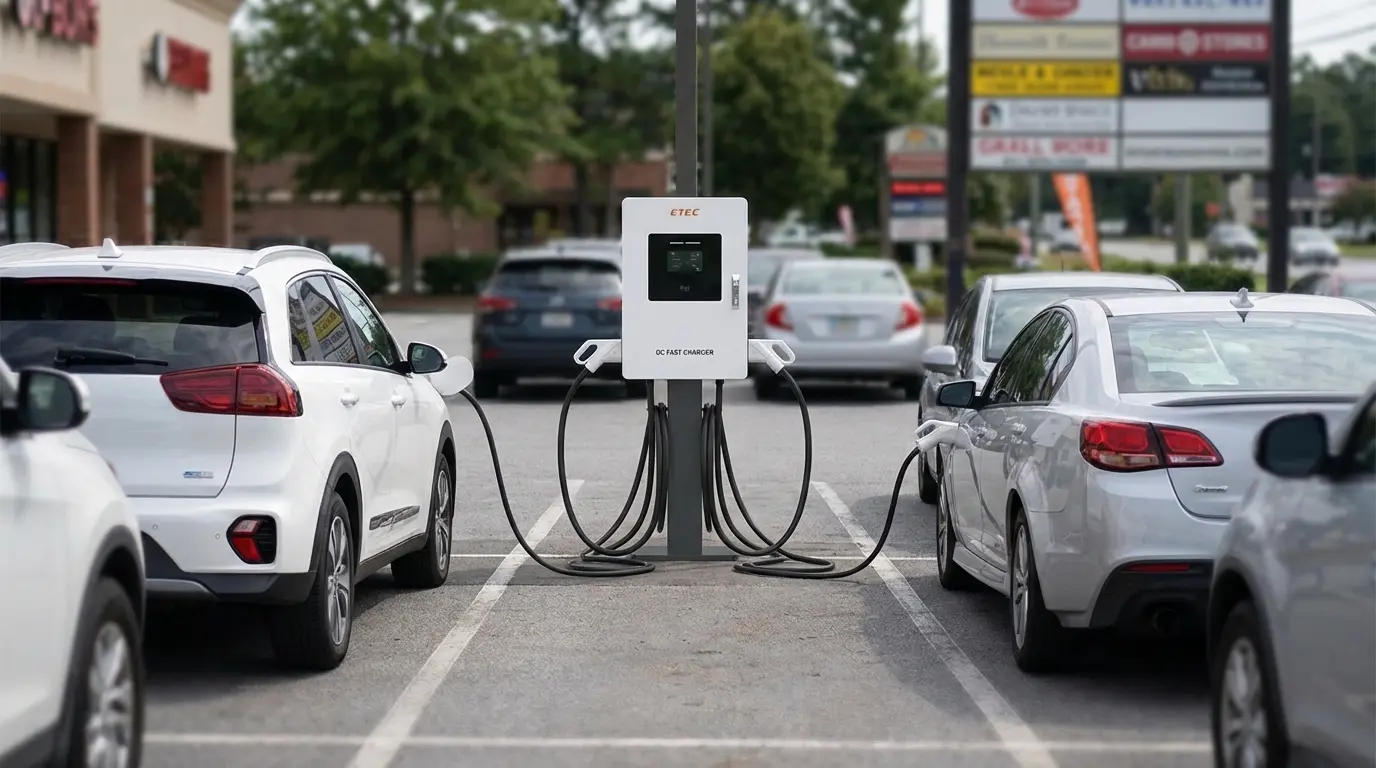
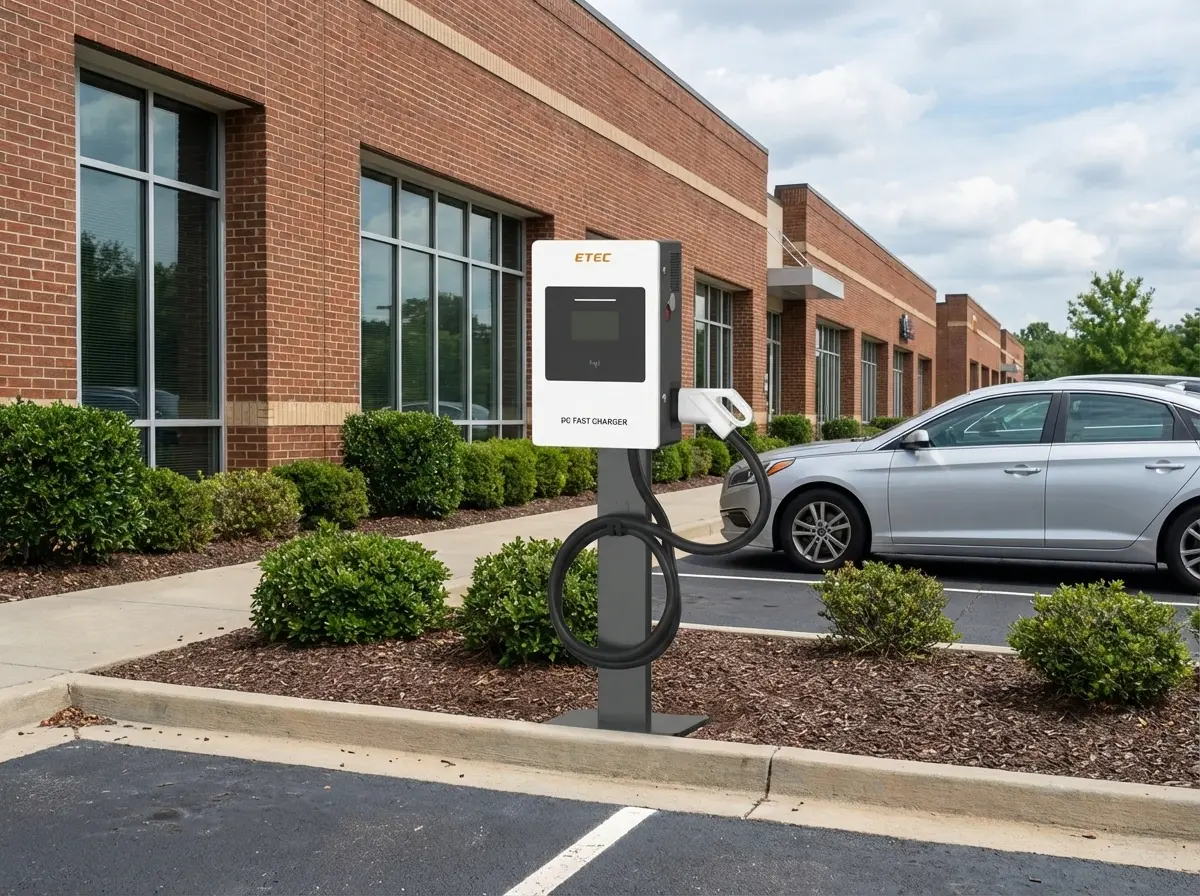
compact DC fast charger in a small commercial/public site.
Example from ETEK: EKDC1 DC Fast Charger is designed for small-site scenarios with 20–60kW options and OCPP communication support.
What procurement should specify (to avoid re-quoting)
Most EV charger RFQs fail because they describe the charger model but not the site, integration, and compliance context. A supplier can only quote accurately if you specify how the charger will be installed, how it will communicate, and what standards apply.
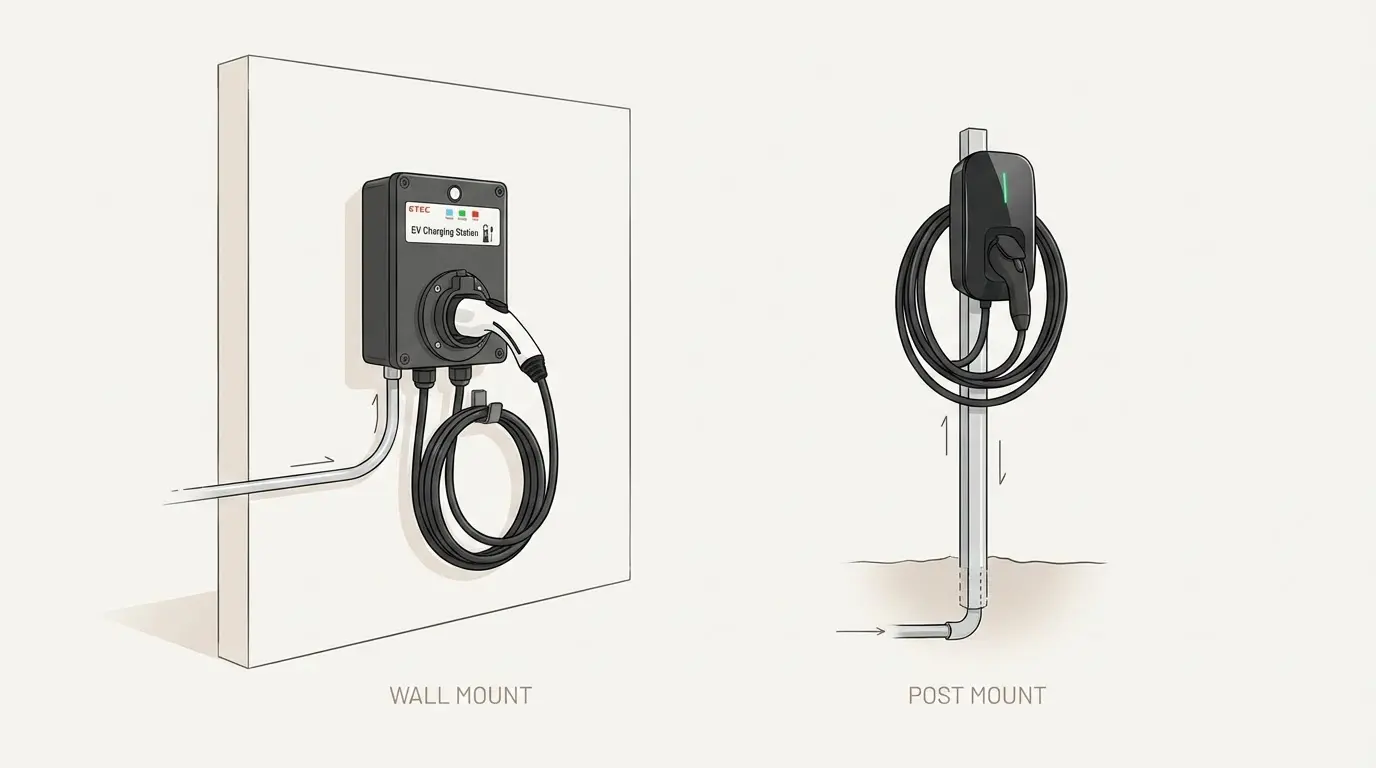
Installation options: helps procurement align civil works and mounting requirements.
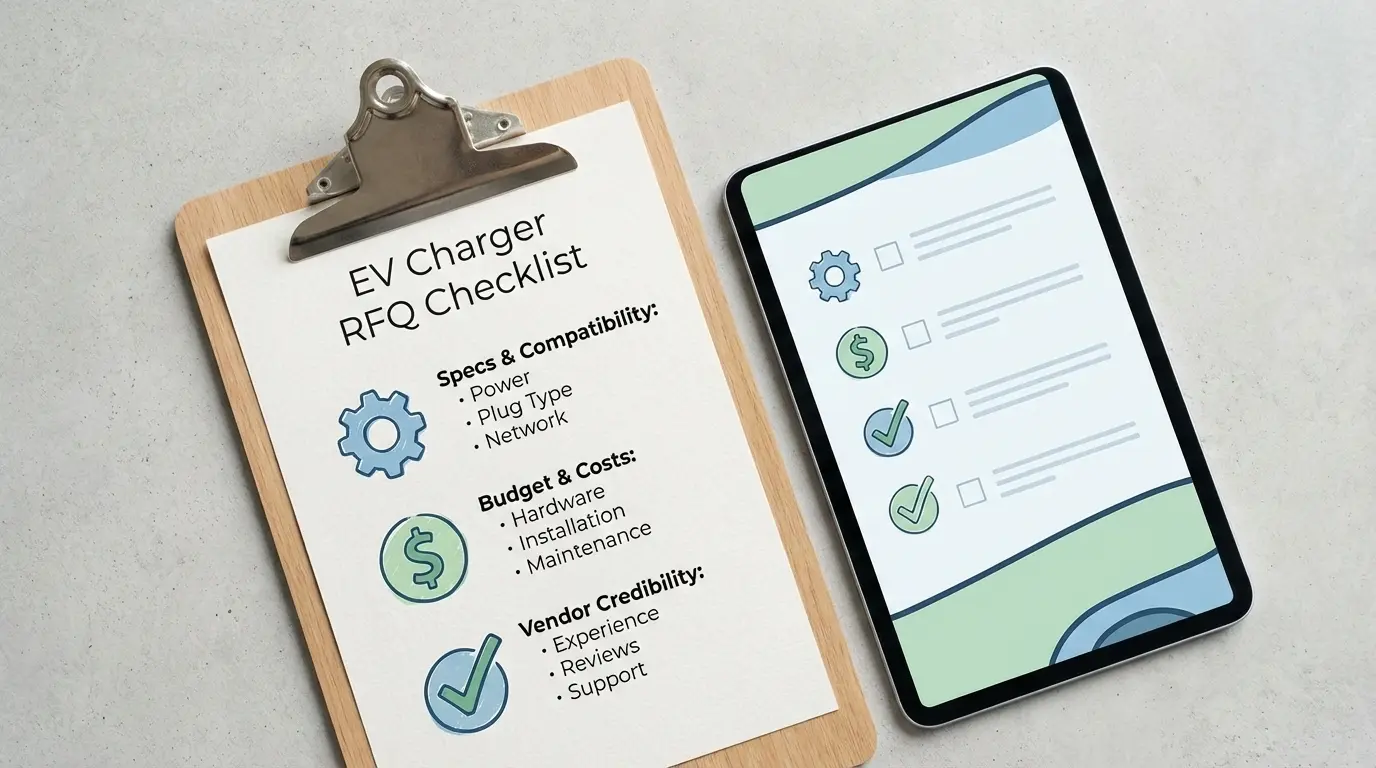
RFQ checklist infographic. Useful for internal handover and consistent supplier quotes.
1) Electrical input & site constraints
- Site supply: single-phase or three-phase, voltage range, and available capacity.
- Installation: wall vs post mounting, available footprint, cable routing, and civil works constraints.
- Environment: indoor/outdoor, corrosion conditions, temperature range, and required IP rating.
2) Protocol & operations requirements
- Do you need OCPP for a CSMS / platform connection?
- Do you need ISO 15118 features (e.g., Plug & Charge) for specific projects?
- Start methods: RFID, app, plug-and-charge, scheduled charging, or operator controls.
3) Connector types (market-dependent)
Connector requirements should match both the market and your vehicle mix. AC deployments commonly use Type 2 in many regions, while DC deployments often require combinations such as CCS variants, CHAdeMO, and/or GB/T depending on the country and customer base.
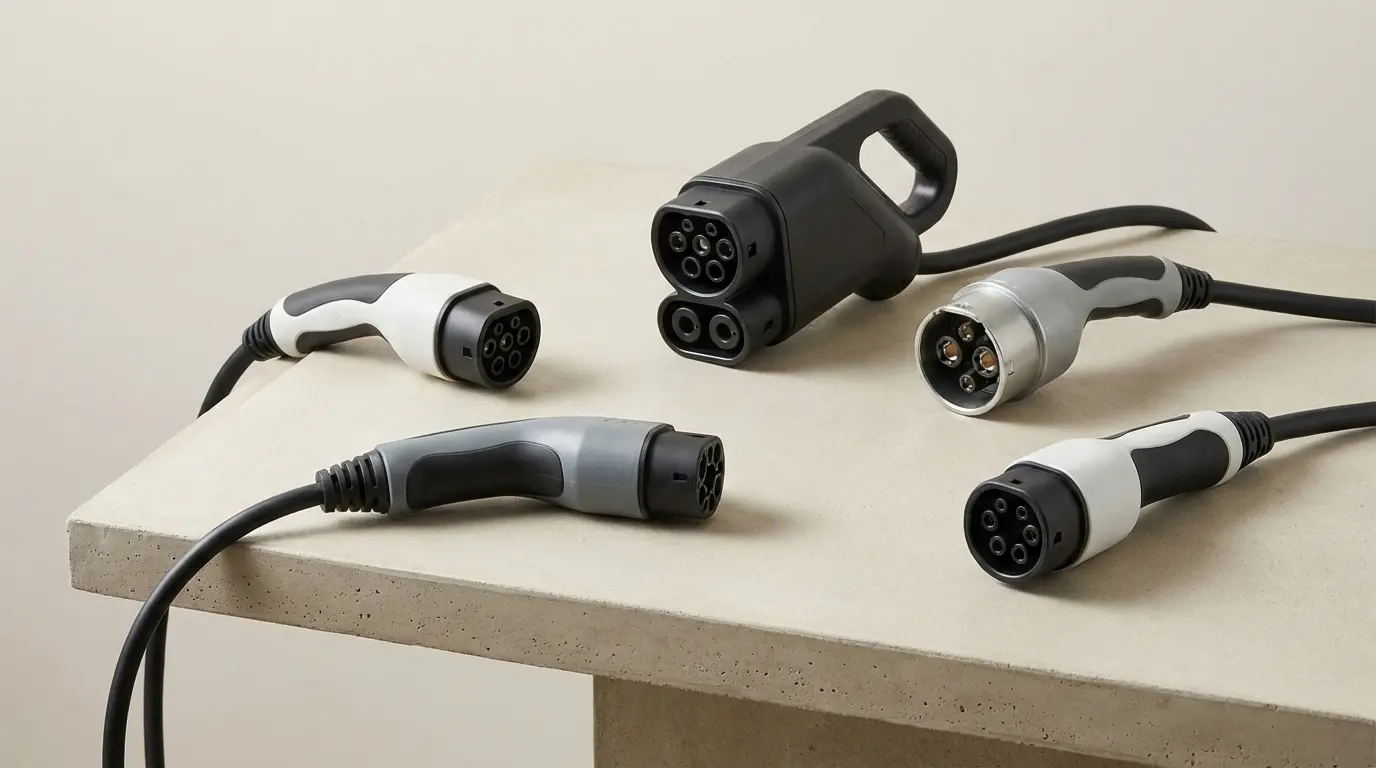
Connector overview. Use to align requirements with vehicles and local standards.
4) Safety & protection expectations
Define the protection and safety functions explicitly. For example, ETEK’s EKEC7 technical data lists integrated residual-current protections and multiple electrical protections (over/under voltage, lightning, over-temperature, etc.). Your RFQ should state the protections you require, and whether upstream devices must be included in the supply scope.
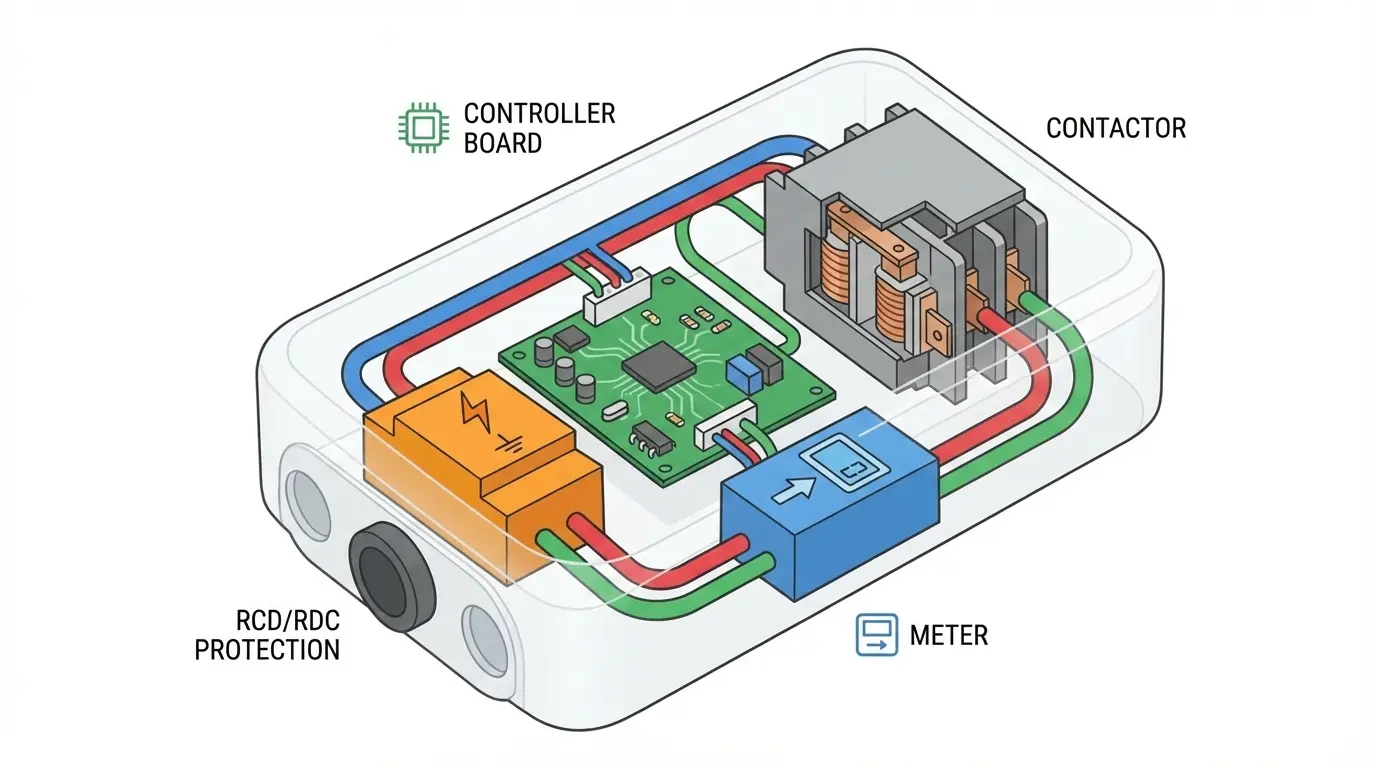
Safety concept. Visualizes internal protection and control components without being overly technical.
Example: ETEK EKEC7 AC EV Charger (high-level spec summary)
Below is a procurement-friendly summary of the EKEC7 AC EV Charger based on the product page technical data. Use it as a reference format for comparing offers.
| Item | What to check |
|---|---|
| Compliance | IEC 61851; CE certification (per product page). |
| Power options | 3.6kW / 7.4kW / 11kW / 22kW options (project-dependent). |
| Connectors | Type 2 / GB/T / Type 1 options; confirm cable vs socket configuration for your market. |
| Connectivity | WiFi / Ethernet / 4G options; confirm what is included vs optional. |
| Protocols | OCPP 1.6J; ISO 15118 mentioned on product page (confirm your backend requirements). |
| Ingress / impact | IP54, IK08 listed in technical data. |
| Operating range | -30℃ to +50℃; humidity 5%–95%. |
Example: ETEK EKDC1 DC Fast Charger (high-level spec summary)
For projects needing faster turnaround, the EKDC1 20–60kW DC fast charger is positioned for site-limited and distribution-limited scenarios. It supports single-gun (20/30kW) and dual-gun (40/60kW) variants.
| Item | What to check |
|---|---|
| Power range | 20kW / 30kW / 40kW / 60kW options; define required throughput and dwell time. |
| Input | AC 380–415V, 3P+N+PE (confirm your transformer/switchboard conditions). |
| Output | 50–1000VDC; check compatibility with your vehicle mix and platform requirements. |
| Connectors | GB/T / CCS1 / CHAdeMO / CCS2 options; single or dual-gun configurations. |
| Protocols & connectivity | OCPP 1.6J support; Ethernet / 4G / WiFi options; scheduled charging and DLB mentioned on product page. |
| Protection | Overload, lightning, short-circuit, leakage protection; emergency stop. |
| Environment | IP54; impact rating IK10 (screen IK08 per technical data). |
Integration reality: OCPP and day-to-day operations
If your deployment requires a charging management system (CSMS), define the integration scope early. Protocol support (such as OCPP) is necessary, but procurement should also confirm:
- What network method is used onsite (Ethernet, WiFi, 4G) and who supplies the SIM/network access.
- Whether remote upgrades, diagnostics, and monitoring are supported (especially for distributed sites).
- Which start methods are required (RFID, app, plug & charge), and what user experience is expected.
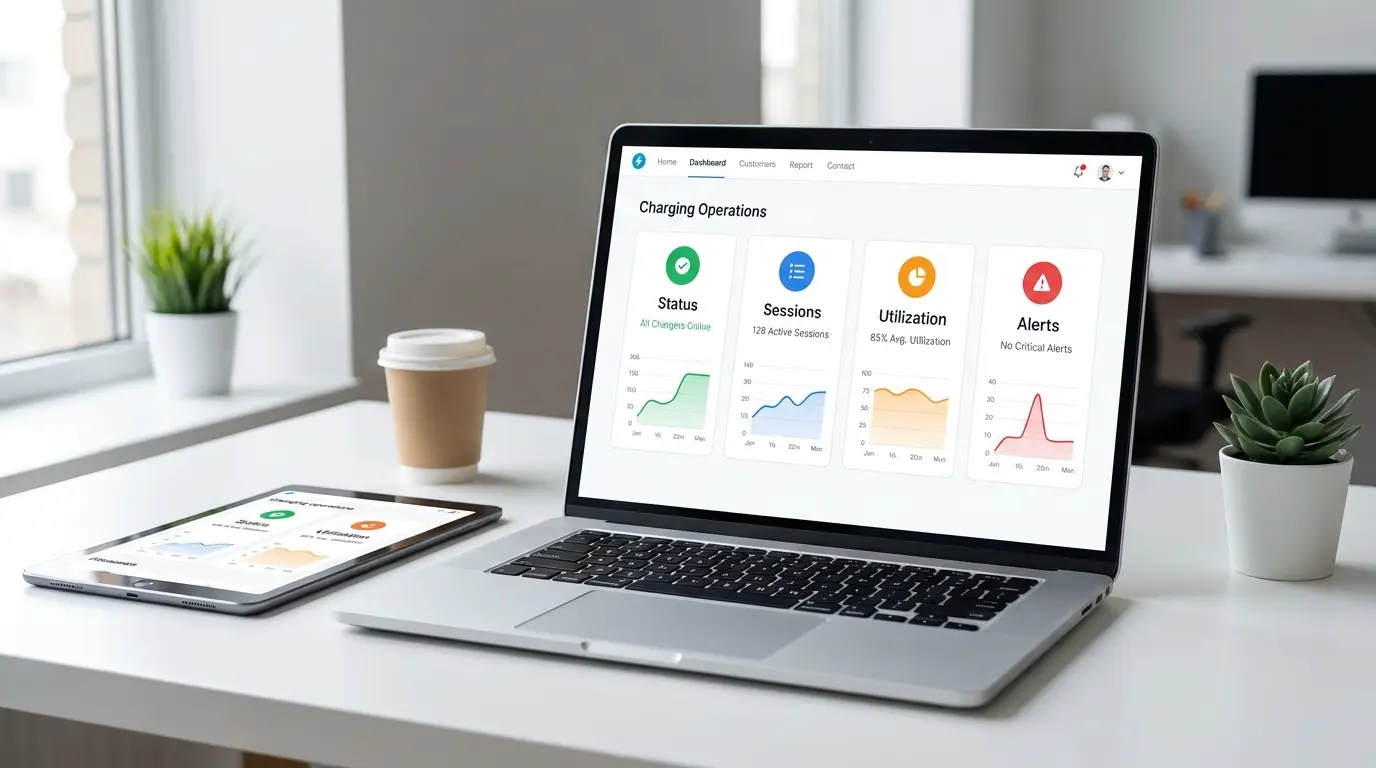
Real-world deployment scenarios
To keep supplier discussions practical, align the charger type to the place it will actually be used. Below are common scenarios buyers use for internal approvals and stakeholder alignment.
Residential
Wallbox charging for overnight dwell time.
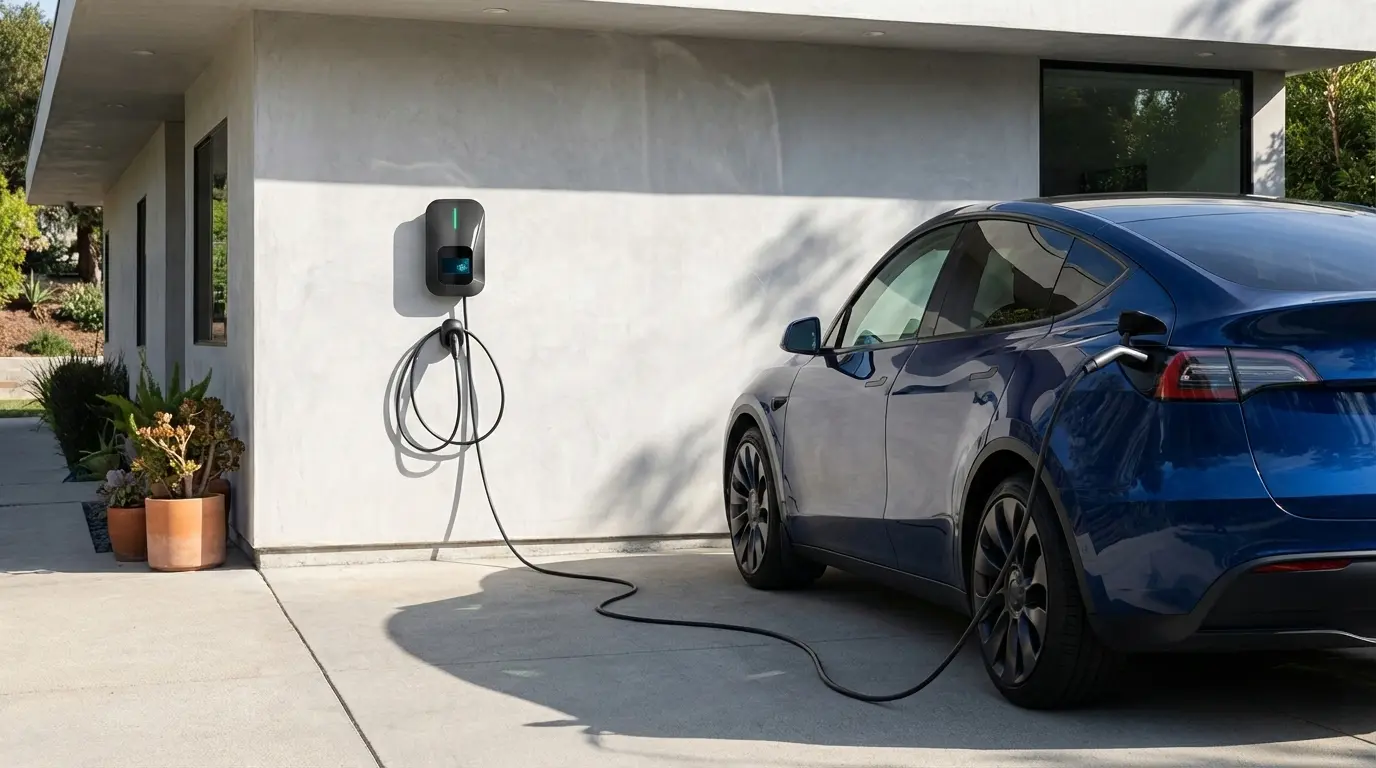
Home installation concept.
Workplace
Employee parking with access control and energy visibility.
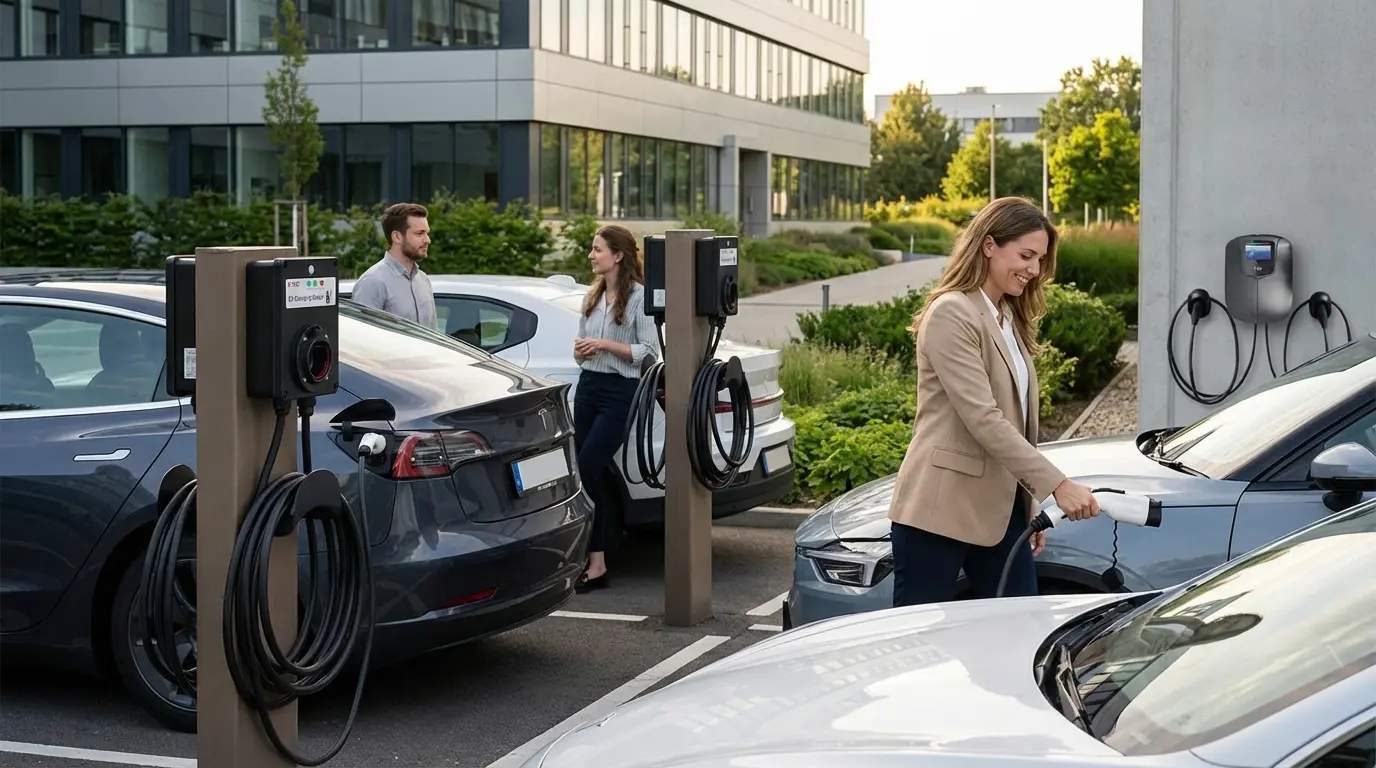
Workplace charging concept.
Public / Fleet
Fast turnaround with DC fast charging for high utilization.
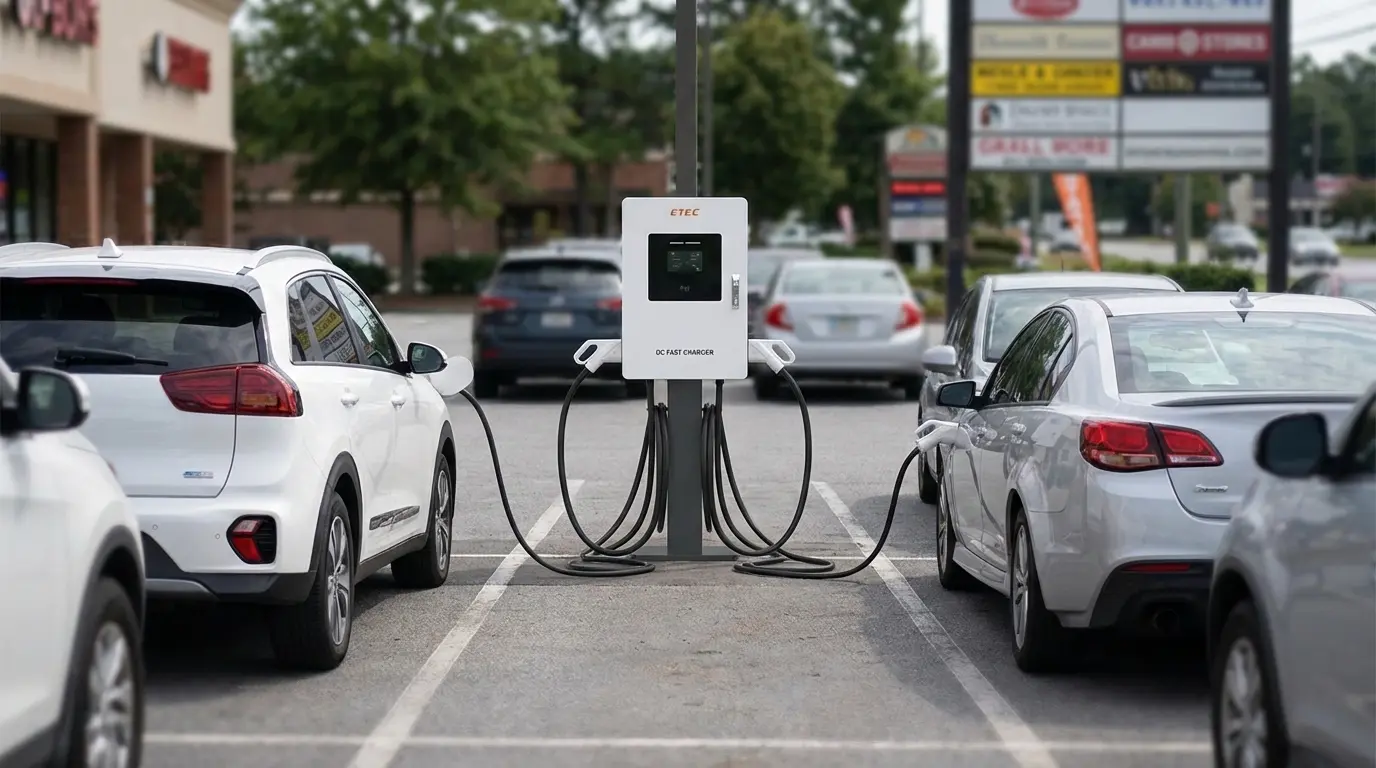
Small-site DC fast charging concept.
Example RFQ checklist (send this to suppliers)
Use the checklist below to request comparable quotations. It’s designed to reduce back-and-forth and avoid commissioning surprises.
- Project country / standard: (e.g., IEC 61851 compliance expectations; any local certification needs)
- Charger type: AC wallbox / DC fast charger / mixed
- Power: required kW per gun and number of charging points
- Input supply: single/three-phase, voltage, available capacity
- Connector requirements: Type 2 / Type 1 / GB/T / CCS / CHAdeMO
- Start method: RFID / app / plug-and-charge / scheduled charging
- Back-end: CSMS platform name, OCPP requirement (version), SIM/network scope
- Environment: indoor/outdoor, IP rating, corrosion, temperature range
- Installation: wall/post mounting, civil works constraints, cable routing
- Deliverables: drawings, manuals, test reports, warranty, spares
- Commercial: target delivery time, destination port, Incoterms
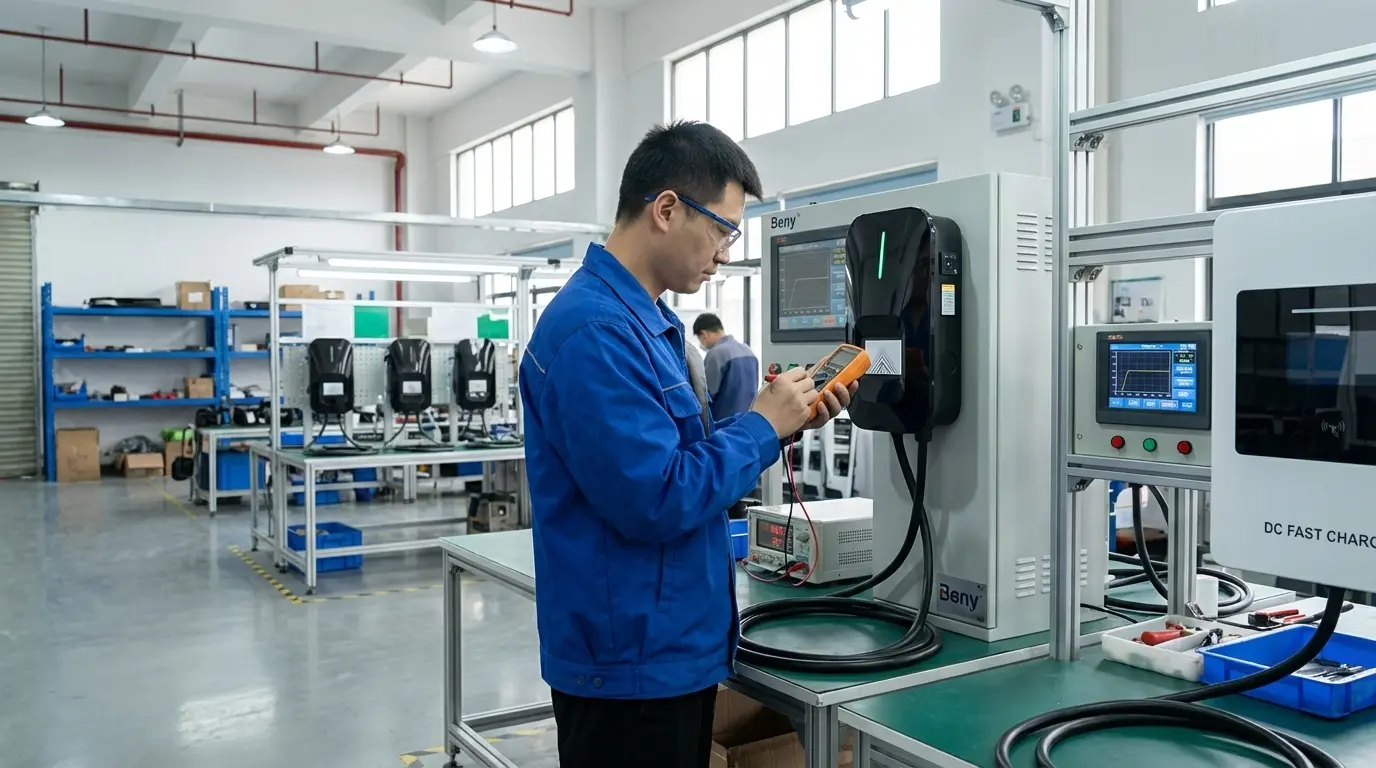
Factory QA concept: helps buyers remember to ask for tests, reports, and acceptance criteria.
Email template
Subject: RFQ – EV Charging Station (AC/DC) for [Project Name] – Delivery by [Date]
Hello,
We are requesting a quotation for EV charging stations for the project below. Please quote based on the specification checklist and state any assumptions clearly.
Project: [Name, Location]
Charger type: [AC / DC]
Power & quantity: [kW per point, qty]
Connector: [Type2/GB-T/CCS/CHAdeMO]
Protocol: [OCPP requirement, network method]
Installation: [Wall/Post, indoor/outdoor]
Target delivery: [Date], [Incoterms]
Please include:
1) Technical offer with key specifications and compliance statement
2) Photos/drawings and a BOM summary
3) Lead time breakdown and warranty terms
Thank you.
Frequently asked procurement questions
What does “OCPP 1.6J” mean for buyers?
OCPP is a communication protocol between the charger and a charging management system. For procurement, the key point is to confirm the required version, network method (Ethernet/WiFi/4G), and who owns the integration responsibility (supplier vs CSMS vendor vs your IT team).
What IP rating should I require?
IP rating depends on the environment. Outdoor deployments typically require higher protection against dust and water. Many commercial solutions list IP54-class protection; your RFQ should align IP rating to your site conditions.
How do I choose AC power (7kW vs 11kW vs 22kW)?
Choose based on dwell time and available site power. Procurement should request a simple load plan from the EPC/engineer: number of bays, peak concurrency, and any load management strategy (e.g., dynamic load balancing).