Solar combiner box for PV systems: how to select and wire it
A PV combiner box sounds simple: merge multiple strings into one output. In practice, it is where many real-world PV problems either get prevented early, or quietly accumulate until you see nuisance inverter trips, damaged inputs, or hard-to-trace intermittent faults.
This guide focuses on practical engineering decisions: where the combiner sits in the system, what should be inside it, how to wire it with low loss and low noise, and how to coordinate surge protection and isolation for safe maintenance.
What a combiner box does in a PV system
A combiner box aggregates multiple PV strings into a single DC output feeding a string inverter, DC distribution cabinet, or monitoring device. Beyond combining conductors, a well-designed box helps you:
- Protect each string with appropriate overcurrent protection (fuses or DC breakers)
- Provide a clear and serviceable isolation point for maintenance
- Limit transient overvoltage stress on downstream equipment using a coordinated DC SPD stage
- Improve field troubleshooting via labeling, test points, and a tidy layout
If you are building a protection strategy around PV balance-of-system components, the most relevant ETEK product entry points are combiner boxes, DC SPDs, and DC isolator switches.
Key components inside (and why they matter)
String overcurrent protection
Most string-level designs use gPV fuses or PV-rated DC breakers. Your choice depends on string count, fault current paths, and service preference. The goal is to isolate a faulted string quickly without shutting down the entire array.
DC surge protection (SPD)
PV arrays are physically large and electrically extended, which makes them susceptible to induced surges from nearby lightning and switching transients. A DC SPD stage near string entry can reduce stress on the inverter input stage and improve long-term reliability.
Isolation / disconnect
A PV-rated DC isolator provides safe separation for maintenance. It is also part of your operational workflow: inspections, troubleshooting, and component replacement are faster when isolation is well planned.
For standards context and test methods, you can start with the IEC publications overview and then consult the applicable documents for SPDs and low-voltage switchgear in PV installations.
Selection checklist for real projects
1) System voltage and environmental rating
Start from your string design (module Voc at the lowest site temperature, strings per MPPT, and safety margins). Then select an enclosure rating that matches where the box is installed (indoor technical room vs rooftop vs exposed outdoor plant).
2) Number of strings, monitoring needs, and expansion
Decide how many inputs you need today, and whether you want room for future strings. If the project values O&M efficiency, consider designs that make labeling, testing, and spare-part replacement predictable.
3) Protection coordination (fuse/breaker + SPD + isolator)
A combiner box is not a single product—it is a coordinated protection boundary. Verify that overcurrent protection, surge protection, and isolation are PV-rated and installed with short, direct conductor runs.
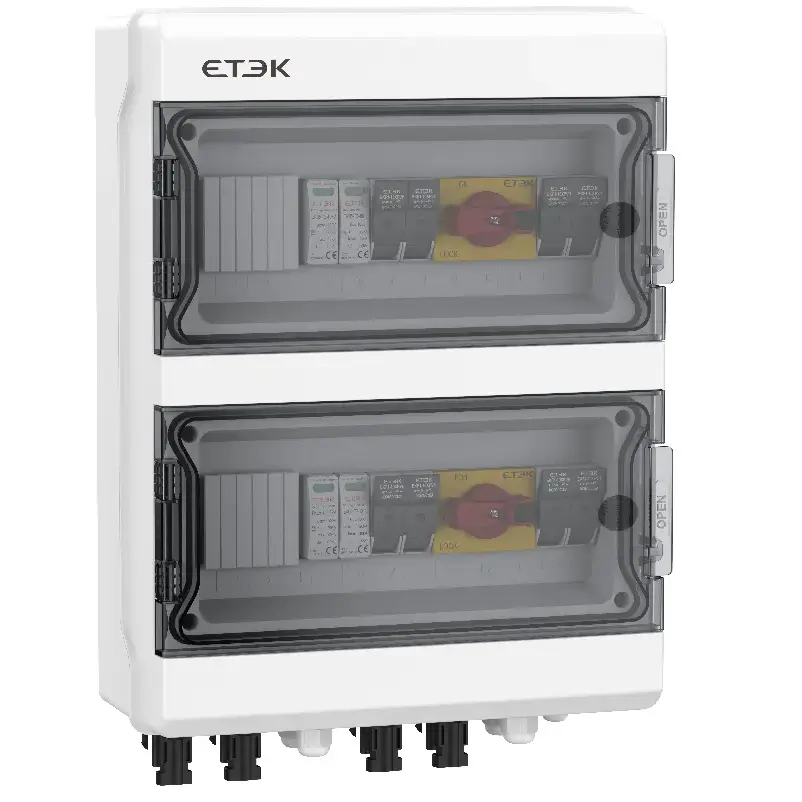
Below is an example combiner box product page you can use as a starting point for common PV configurations:
Wiring best practices that reduce faults
Keep conductor routing compact
Large conductor loops can increase induced voltages during fast transients and make EMC behavior worse. Route positive/negative conductors close together, keep runs short, and avoid unnecessary bends.
Design for maintainability
Technicians should be able to identify each string quickly, replace protection devices safely, and verify grounding continuity. Small layout decisions in the combiner (label positions, cable entry, terminal spacing) strongly affect maintenance time over the system lifetime.
Grounding and bonding quality
Surge protection performance depends on the path to earth. Keep the SPD earth conductor short and straight, and minimize impedance. Good bonding practices reduce touch potential risks and help protection devices operate as intended.
DC SPD and isolator coordination
Two items are often specified on paper but weakened during installation: the SPD connection geometry and the isolator placement. A practical approach is:
- Install the DC SPD stage as close as reasonable to the string entry point inside the combiner
- Keep SPD-to-earth wiring short, direct, and low-inductance
- Place the isolator where it supports safe maintenance without requiring unnecessary disassembly
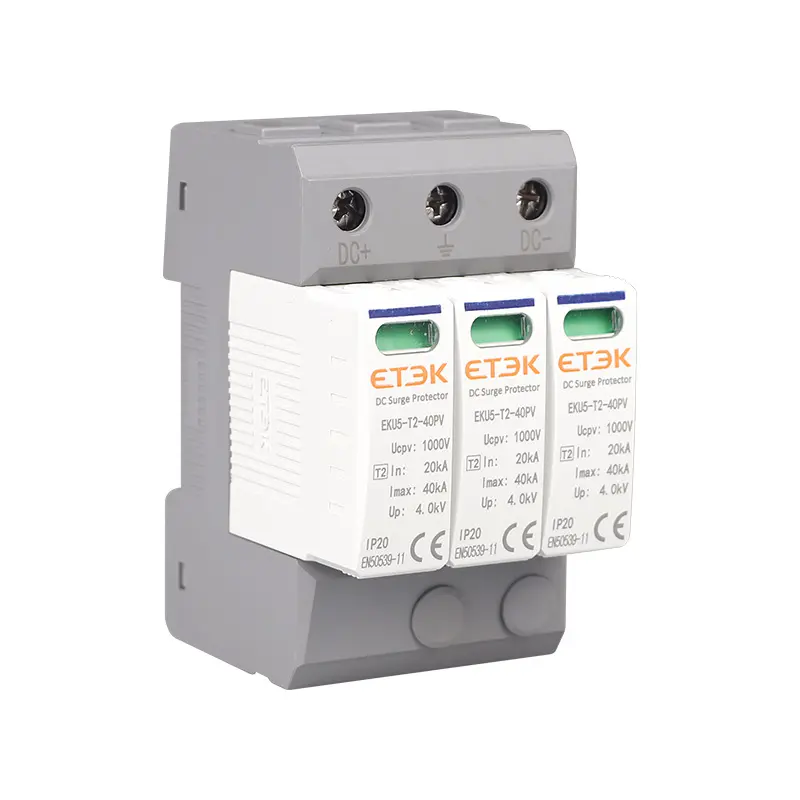
Here is a PV-oriented DC SPD example that fits high-voltage DC arrays:
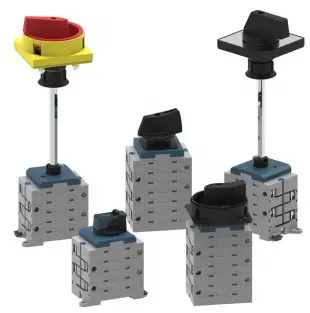
And here is an example DC isolator that can be used in PV disconnect and maintenance workflows:
ETEK product links for a complete solution
If you are building a consistent PV distribution approach (and want fewer surprises during commissioning), start from the category pages and then select models based on voltage, string count, and site exposure:
- Combiner box solutions (configurations for string aggregation and protection)
- DC SPD lineup (coordinate voltage rating and protection level)
- DC isolator switches (safe separation for maintenance)
- DC circuit breakers and DC fuses (string and distribution protection)
- Blog and surge protection knowledge (for planning a content cluster)
FAQ
Do I need both a combiner box and an inverter SPD?
It depends on cable length, site exposure, and system architecture. For longer DC runs or exposed locations, staged protection (combiner side and inverter side) is commonly considered to keep residual voltage low where it matters.
What is the most common combiner box wiring mistake?
Long, looping conductors—especially the SPD earth connection. Geometry matters: it changes residual voltage during fast transients and can reduce real protection effectiveness even when the SPD itself is correctly rated.
How should I choose between fuse-based and breaker-based string protection?
Both can work. The decision is typically about fault coordination, service workflow, cost, and the specific current/voltage ratings. Whichever you choose, confirm PV/DC ratings and a clear maintenance method.