RCD for EV charging stations: how to choose the right type
EV charging adds a new set of electrical behaviors to familiar low-voltage distribution design. The load is power-electronic, the current can be continuous for hours, and DC components of leakage current may appear depending on the charger topology and fault conditions. That is exactly why “any RCD” is not a safe default choice for an EV charging station.
This article is a practical engineering guide to selecting an RCD for EV charging stations with the right residual current type, sensitivity, and coordination with upstream breakers. It is written for EV charger OEMs, panel builders, installers, and buyers who want fewer compliance surprises and fewer nuisance trips after commissioning.
Why EV charging leakage current is different
In traditional building loads, residual current protection mainly focuses on AC leakage patterns caused by insulation faults, moisture ingress, damaged cables, or appliance failure. EV charging systems are different because they typically include rectification and switching stages, and many designs use EMI filters and capacitive coupling that create small but persistent leakage currents.
Two real-world consequences follow:
- Leakage current may be higher even in healthy systems: long cables, multiple chargers in one cabinet, and higher switching frequencies can increase background leakage.
- DC components may appear: depending on the charger design and fault modes, a smooth DC residual current can blind certain RCD types, making correct selection critical.
If you want a standards starting point, begin with the IEC publications overview and then consult the applicable documents for RCDs and EV supply equipment. Your local code requirements still apply, but understanding the residual current “shape” is the core of the selection logic.
Type AC, Type A, Type B, and EV-specific options
Type AC (generally not preferred for modern EV charging)
Type AC devices respond to sinusoidal AC residual currents. In many modern installations, Type AC is increasingly avoided for power-electronic loads because it may not provide the expected protection coverage when non-sinusoidal waveforms are present.
Type A (common baseline for many chargers)
Type A responds to AC residual currents and pulsating DC residual currents. For many EV charging station designs, Type A can be part of a compliant solution when the EVSE includes additional DC residual current detection (commonly 6mA DC), or when the charger design and standards route you to a specific arrangement.
Type B (when smooth DC residual currents must be covered)
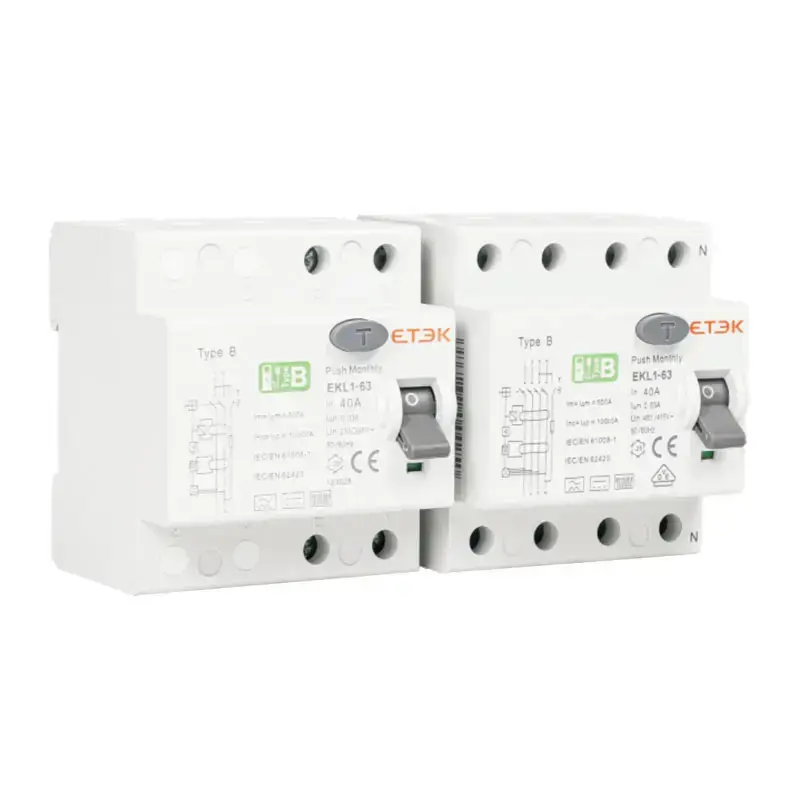
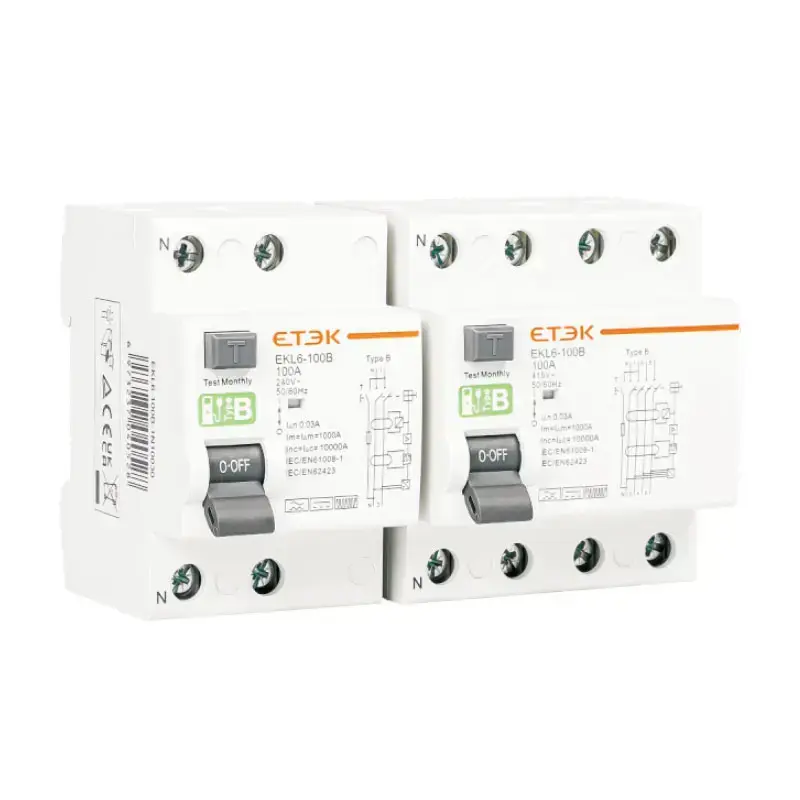
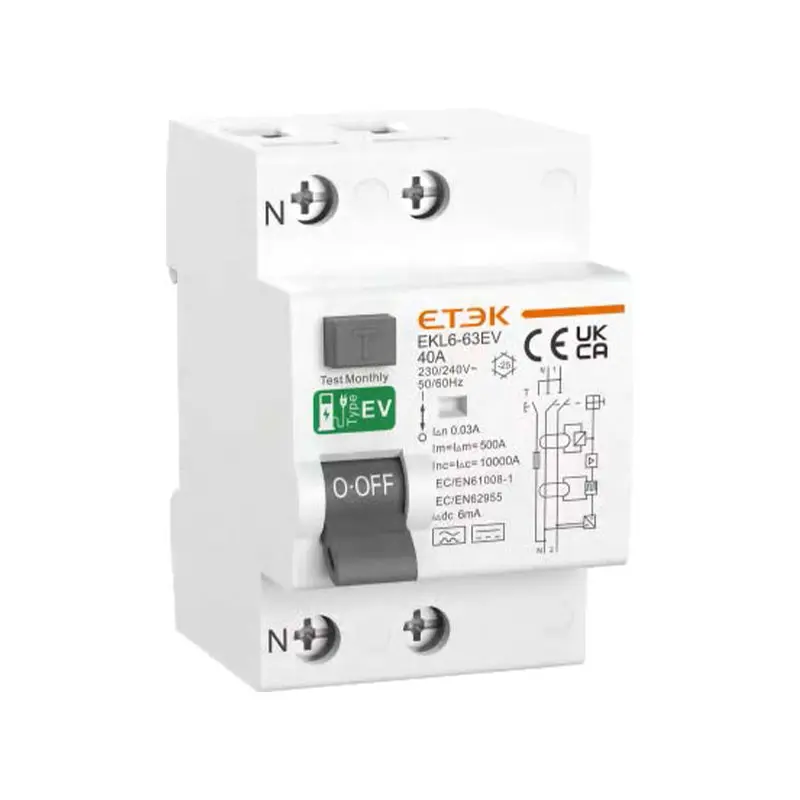
Type B devices are designed to detect AC, pulsating DC, and smooth DC residual currents. They are often used when the protection strategy must explicitly cover smooth DC leakage currents that could otherwise blind Type A devices. Type B selection is typically driven by system architecture, charger topology, risk assessment, and compliance requirements.
ETEK’s RCD/RCCB portfolio includes EV-related variants. As one example of EV charging oriented protection, you can review this product page:
RCBO vs RCCB: how to decide
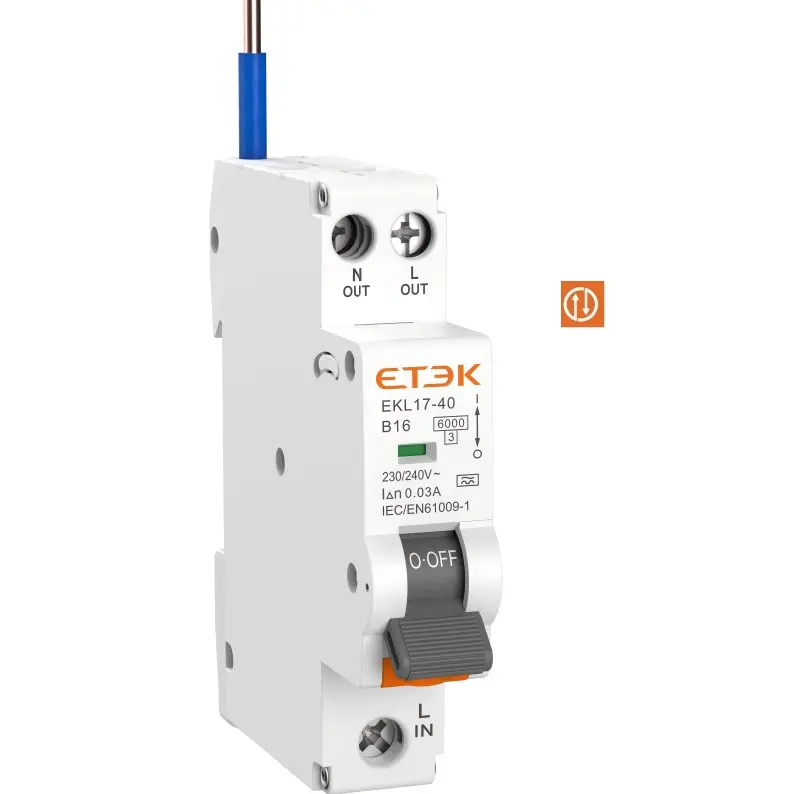
An RCCB provides residual current protection but requires separate overcurrent protection (MCB/MCCB) upstream. An RCBO combines residual current protection with overcurrent protection in one device. RCBOs can simplify wiring and coordination in compact EV charger distribution boards, and they can improve serviceability when each charger circuit has a dedicated protective device.
If you are building EV distribution boards, you may also want to browse ETEK’s category pages for RCCB and RCBO to plan a consistent platform across markets.
Selection checklist for installers and OEMs
1) Charger type: AC wallbox vs DC fast charger
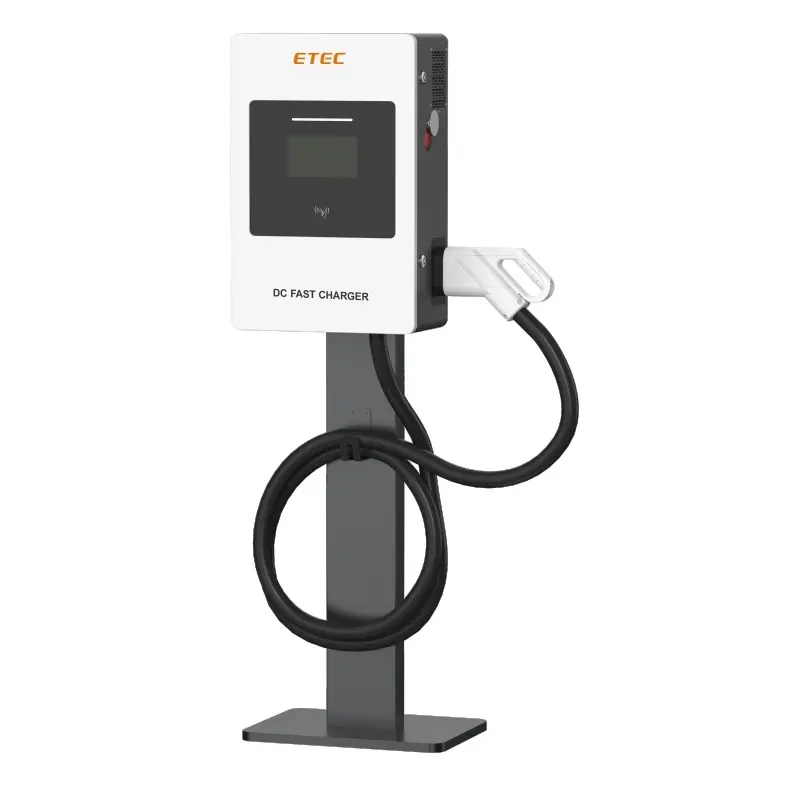
AC chargers and DC fast chargers have very different internal architectures. The leakage current behavior, harmonic content, and fault characteristics can differ accordingly. For multi-charger stations, total background leakage can also accumulate.
For example, if your station includes compact DC fast chargers, you can reference ETEK’s DC fast charging product line to align protection with the station architecture:
2) Required residual current type and DC detection strategy
Don’t select based on “what we used last time.” Select based on what residual current waveforms the protection must detect. If your design relies on 6mA DC detection inside the EVSE, ensure the intended coordination is valid for your target markets and certification path.
3) Rated current, poles, and selectivity goals
Match rated current to the feeder and cable sizing, and ensure the pole configuration matches the supply (single-phase vs three-phase). In larger stations, coordination and selectivity become important: you want a downstream device to trip first when a single charger has a fault, not the whole site.
4) Nuisance tripping tolerance and installation environment
Outdoor stations face moisture, temperature cycling, and cable movement. Small insulation issues can increase leakage currents over time. A robust protection strategy isn’t only about passing a test report; it’s about stable operation across seasons and real-world maintenance quality.
Where to place protection in the system
Think in layers:
- Per-charger branch protection: often an RCBO or RCCB+MCB arrangement, used to isolate faults to one dispenser or one wallbox.
- Group or cabinet-level protection: used to protect a sub-panel or a group of chargers and manage maintenance boundaries.
- Site main protection and coordination: focuses on upstream short-circuit protection, distribution integrity, and safe isolation of the whole station.
In a well-engineered station, the RCD choice is consistent with the site’s distribution architecture and service workflow. It also pairs naturally with your protection “ecosystem,” including surge protection and monitoring where needed.
Common mistakes that cause nuisance trips
Oversimplifying the RCD type decision
“Type A is enough for everything” and “Type B for all chargers” are both oversimplifications. The right answer depends on charger design, compliance constraints, and total station leakage behavior.
Poor earthing and bonding practices
Residual current devices depend on the integrity of the earthing system and proper bonding. Loose connections, shared neutrals, or incorrect wiring can create unpredictable behavior that looks like a product problem but is actually an installation problem.
Putting too many chargers behind a single device
Even small background leakage currents can add up. If too many power-electronic loads share one RCD, you may see nuisance trips during weather changes, cable handling, or specific vehicle-charger combinations.
ETEK products for EV charging protection
To build an EV charging station with consistent protection and easier procurement, these ETEK entry points are usually the fastest way to start:
- EV charger RCDs (EV-oriented residual current protection options)
- RCCB and RCBO (device families for branch-level protection strategies)
- EV charging station (charger product families and applications)
- Blog (for building a content cluster around EV protection topics)
If your project needs higher-level surge coordination as well, you can also review the broader surge protection category: Surge Protection Device.
Here is one RCBO example often used in modern distribution boards for clean, per-circuit protection organization (market selection depends on certification needs):
FAQ
Do I always need Type B for EV charging?
Not always. The required protection depends on charger topology, whether the EVSE provides DC residual current detection, and your target market’s installation rules. Use Type B where smooth DC residual current coverage is required and validated for your compliance path.
Is an RCBO better than an RCCB for charger circuits?
It can be. RCBOs can simplify wiring and make fault isolation more granular. RCCB-based designs are also common, especially when you want a specific upstream breaker strategy. Choose the approach that matches your panel architecture and service workflow.
Why does my EV station trip only with certain vehicles?
Vehicle onboard charger behavior and EMI filter characteristics vary. In shared protection arrangements, the combined leakage behavior can cross a trip threshold for certain combinations. Splitting circuits and improving coordination often stabilizes operation.